
A Season in Crisis: From Champions to Struggling Contenders
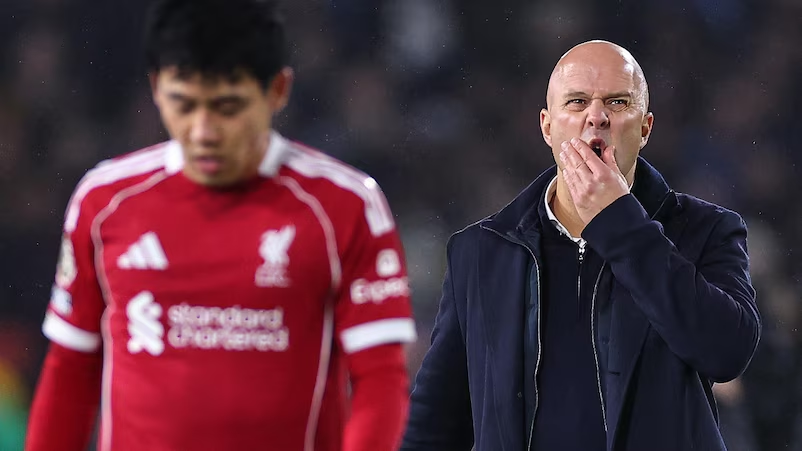
Liverpool’s 2024-25 season represents a dramatic departure from their triumphant campaign under Arne Slot just twelve months ago. The defending Premier League champions have hit a wall, currently languishing in eighth place—a staggering ten points behind frontrunners Arsenal. What should have been a period of consolidation has transformed into a full-blown crisis, with tensions between key players and the manager threatening to derail the entire campaign.
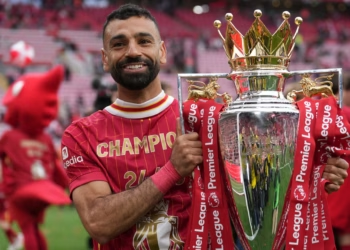
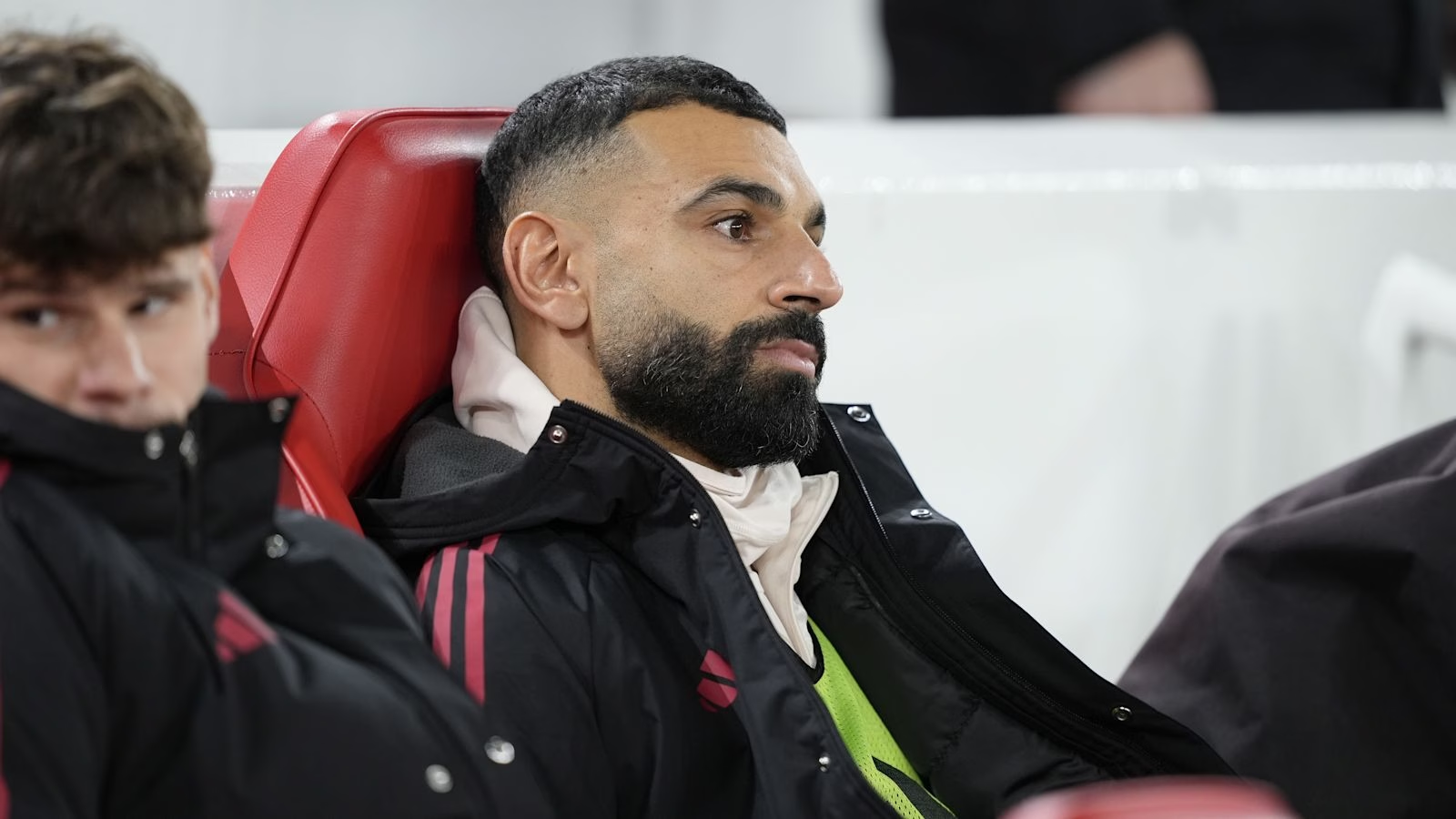
The latest flashpoint involves Mohamed Salah, the club’s most prolific forward and symbolic leader of the successful Jurgen Klopp era. After being benched for three consecutive matches, Salah broke his silence with a scathing public criticism of manager Arne Slot, effectively signaling the breakdown of what was once a harmonious working relationship.
Salah’s Public Frustration: A Tipping Point
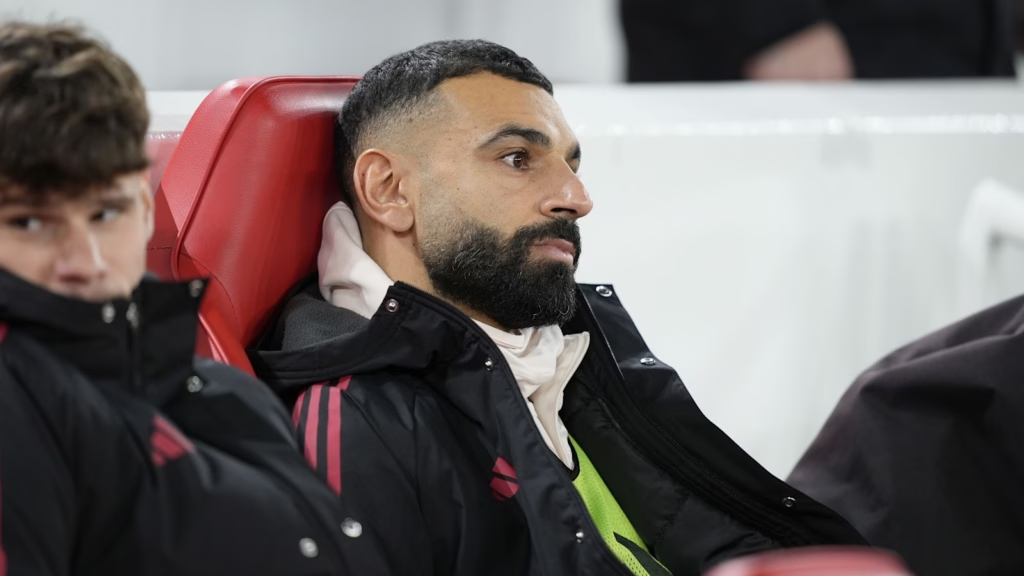
Following Liverpool’s disappointing 2-2 draw against relegation-threatened Leeds United, Salah didn’t hold back his emotions during a post-match interview:
“I’ve said a few times before that I have a good relationship with the manager, and now all of a sudden we have no relationship. I don’t know why. It seems like the club are throwing me under the bus – that’s how I feel.”
The Egyptian winger’s words were unmistakable. He expressed his unwavering commitment to Liverpool while making clear his displeasure with how he’s been treated:
“This club, I will always support it. My kids will always support it. I love the club so much and I always will. But this situation is not acceptable to me. I don’t get it. It’s like I’m being thrown under the bus. I don’t think I’m the problem. I have done so much for this club. I shouldn’t have to fight every day for my position—I earn it.”
These weren’t the words of a player content with his role. They were the words of an athlete questioning whether his manager believes in him.
The Statistical Reality: Context Matters
To understand the full picture, it’s important to examine Salah’s recent performance in context. This season, the 33-year-old has recorded 4 goals and 2 assists across 13 appearances—numbers that would satisfy most forward-thinking fans. However, it’s his overall contribution and impact that tell a different story.
Last season, Salah was absolutely dominant. He scored 29 goals and created 18 assists, establishing himself as the Premier League’s standout performer and driving Liverpool to their latest championship. His form was so exceptional that the club swiftly offered him a new two-year contract, securing his future despite approaches from Saudi Arabian clubs.
The contrast between these campaigns highlights the broader issues plaguing Liverpool under Slot’s management.
The Tactical Problem: Has Slot Lost the Plot?
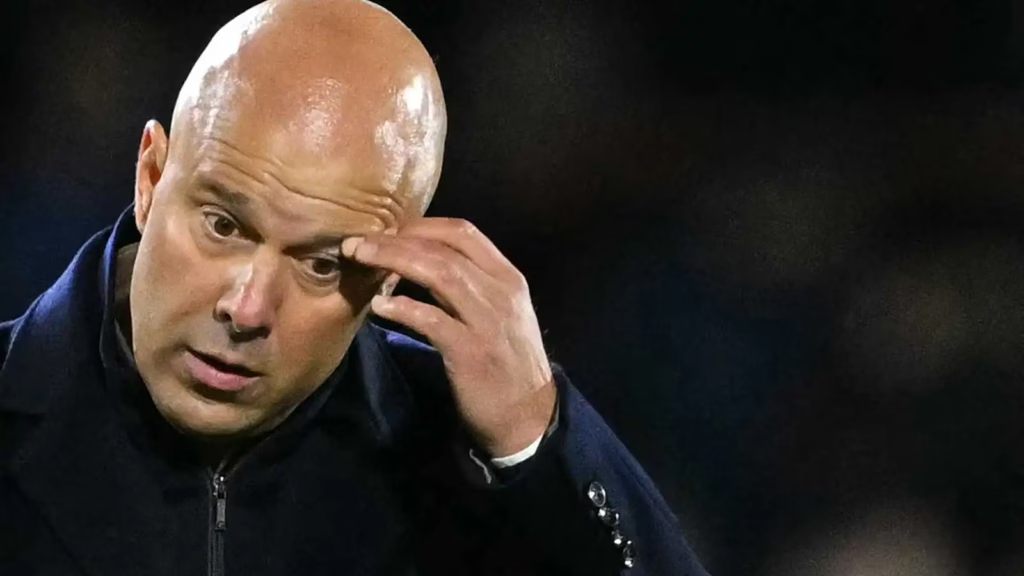
A recurring criticism has haunted Slot since his first full season at Anfield: that he won the league by implementing Klopp’s blueprint and tactics. While this narrative has its merits, Slot has introduced tactical adjustments that earned praise early on. He rebalanced the midfield, elevated Ryan Gravenberch to prominence, and brought structural improvements to a team showing signs of fatigue under Klopp’s final years.
However, this season tells a different story. Slot has fundamentally restructured Liverpool’s playing style, and the results suggest he may have taken the wrong direction.
The Loss of Intensity and Pressing
The relentless pressing game that suffocated opponents and forced Liverpool to play at crushing intensity has largely disappeared. Passing has become slower, more methodical. The runs in behind that created space and defensive vulnerability in opposition ranks have dried up. Critics argue that Slot’s Liverpool now resembles Erik ten Hag’s Manchester United more than the dominant machine Klopp constructed—a concerning parallel for those who’ve watched Ten Hag’s tactical struggles unfold.
Squad Composition: The Hidden Crisis
While much attention has been devoted to new signings like Alexander Isak, Florian Wirtz, Jeremie Frimpong, and Milos Kerkez, the true roots of Liverpool’s problems lie elsewhere. The summer’s expensive acquisitions haven’t delivered as expected, with only Hugo Ekitike offering genuine impact.
But the real damage was done through departures, not arrivals.
The Impact of Losses in the Offseason
The tragic loss of Diogo Jota continues to weigh heavily on the entire organization. Beyond the emotional toll, his absence removes a critical tactical element—a forward who understood how to find space, exploit defensive weaknesses, and finish with precision.
Equally damaging have been the sales of Luis Diaz and the departure of Trent Alexander-Arnold. These weren’t just player losses; they represented the dismantling of fundamental relationships and tactical structures that had served Liverpool exceptionally well.
The Salah-Alexander-Arnold Partnership: A Forgotten Alliance
Few footballing partnerships have been as effective as the understanding between Mohamed Salah and Trent Alexander-Arnold. They played with intuitive precision, understanding instinctively where each other would move, when to overlap, when to drop deep, and when to create space.
Alexander-Arnold’s crossing ability and playmaking weren’t merely useful—they were essential to Salah’s effectiveness. His pitch-splitting passes and ability to bring the ball forward created the conditions for Salah to operate at his most devastating. Without this partnership, Salah’s influence has noticeably diminished.
The absence of this dynamic has forced Salah into a more isolated role, making his task significantly harder despite his individual quality remaining exceptional.
The Cody Gakpo Question: Poor Positioning Choices
Gakpo has become a focal point of Liverpool’s tactical issues. Rather than stretching the pitch and creating width—elements Liverpool desperately needs—Gakpo tends to cut inside, slowing play and reducing the team’s attacking penetration. The relentless focus on his involvement, despite repeated ineffectiveness in the wide role, raises questions about Slot’s tactical flexibility and decision-making.
Defensive Inconsistency: Accountability Questions
Slot has shown a troubling willingness to hold some players accountable while offering surprising leeway to others. Ibrahima Konate, by most assessments, has underwhelmed this season, yet continues to start regularly without scrutiny. This inconsistent approach to team selection suggests a potentially problematic approach to squad management.
The Positional Experiment Gone Wrong
Perhaps most perplexing is Slot’s decision to occasionally position Dominik Szoboszlai—arguably Liverpool’s best performer this campaign—at right wing to accommodate Salah’s benching. Szoboszlai has been outstanding, yet pushing an in-form midfielder out of position while benching a fully fit Salah represents questionable judgment.
Similarly, Slot has resisted pairing Alexander Isak and Hugo Ekitike upfront—a combination that could potentially provide the goal-scoring firepower Liverpool desperately needs. The reluctance to experiment with fresh attacking formations, given current results, suggests a manager potentially losing faith in his own squad.
The Deeper Issue: A Philosophical Mismatch
The most concerning aspect of this situation extends beyond individual decisions. Slot appears increasingly willing to push players out of position and bench his most influential performer, yet the tactical system itself hasn’t fundamentally solved Liverpool’s problems.
If Salah couldn’t keep pace in an energetic, high-pressing system, that would represent a legitimate age-related concern. However, Liverpool no longer plays at that intensity. The team lacks the drive and dynamism that characterized their best years. By benching Salah rather than adapting the system to leverage his remaining qualities, Slot may be addressing the symptom rather than the disease.
The Klopp Legacy Question
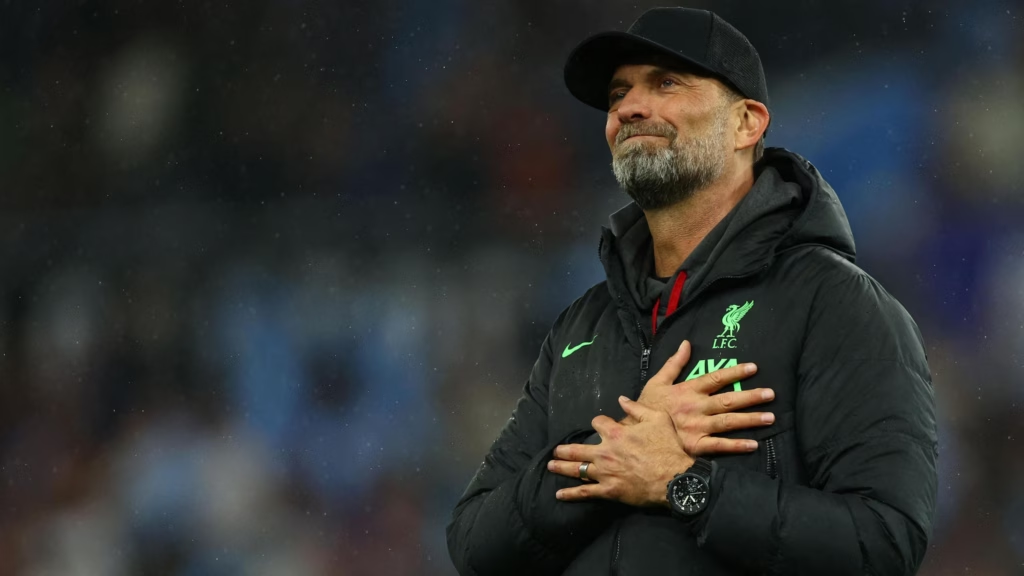
Salah has become the symbolic embodiment of Liverpool’s Klopp era—a period of excellence, triumph, and sustained high performance. His individual decline, real or perceived, becomes a reflection on the entire organization’s trajectory. By benching him rather than finding solutions to integrate him effectively, Slot isn’t hiding the evidence of the team’s struggles. Instead, he’s highlighting them while simultaneously sending a troubling message about confidence in his squad.
Where Does This End?
Salah undoubtedly made the right decision staying at Liverpool rather than accepting lucrative Saudi offers. A player of his ambitions wouldn’t prioritize immediate financial gain over remaining at a European title contender. However, you must wonder if the feeling is mutual—whether Slot views Salah as crucial to Liverpool’s future or as a relic of the previous regime holding the team back.
Conclusion: A Season Requiring Urgent Course Correction
Liverpool stands at a critical juncture. The defending champions have fallen 10 points behind the pace, internal tensions are escalating, and the manager’s tactical philosophy appears increasingly at odds with the squad’s strengths. Whether Slot can navigate this crisis, restore fractured relationships, and rediscover the winning formula that characterized Liverpool’s recent history remains the defining question of this troubled campaign.
The next weeks will prove decisive in determining whether Liverpool’s season can be salvaged or whether this represents the beginning of an extended period of underperformance.