
Blue Sharks Defeat Eswatini 3-0 to Secure Fairytale World Cup Berth
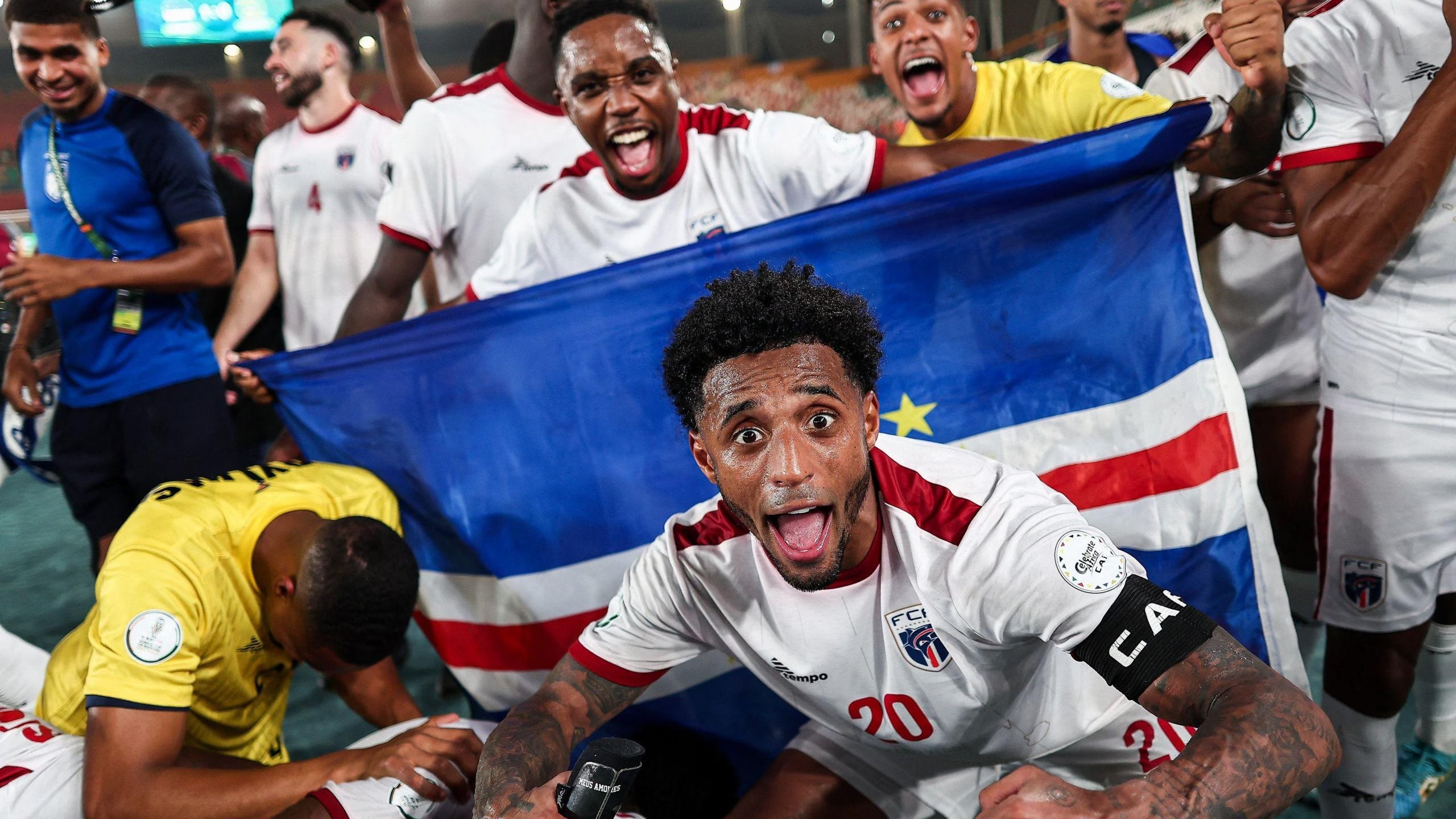
Cape Verde achieved the ultimate footballing fairytale on October 13, 2025, securing their first-ever FIFA World Cup qualification with a commanding 3-0 victory over Eswatini at the Estádio Nacional in Praia. The Blue Sharks’ historic achievement transforms the small island nation of 550,000 people into World Cup participants, making them the second-smallest country after Iceland to reach football’s greatest stage.
A Nation United
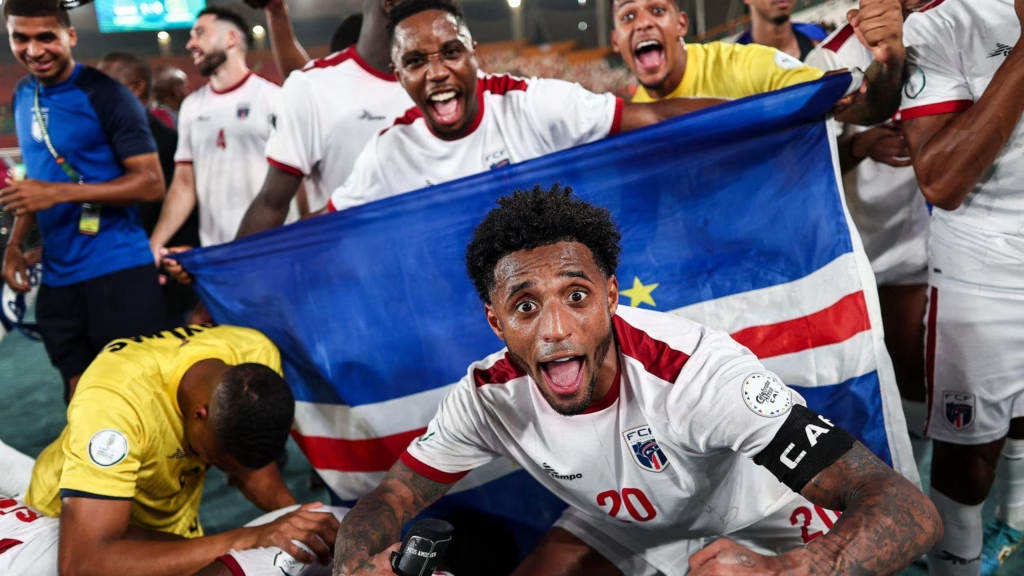
The atmosphere at the Estádio Nacional was electric as Cape Verde entered the match knowing that victory would guarantee their World Cup berth. The government declared a half-day holiday across the country so citizens could support their team, demonstrating the monumental significance of this qualifying campaign for the archipelago nation.
Tickets for the match sold out in record time according to FIFA, with fans traveling from across the islands to witness what many hoped would be the most important match in their football history. The pre-match tension was palpable as Cape Verde needed just one point to secure qualification, but the team was determined to achieve the feat in style.
Coach Pedro “Bubista” Brito addressed the historical context of the achievement: “Giving this happiness to these people is enormous… it’s a victory for all the Cape Verdean people and, above all, a victory for those who fought for our independence”. The timing proved particularly poignant as the nation celebrated its 50th independence anniversary year.
First Half Nerves
The opening 45 minutes showcased typical qualification tension as Cape Verde struggled to convert their nervous energy into clear-cut opportunities. Eswatini, aware that even a defeat might not end their slim qualification hopes depending on other results, defended resolutely and frustrated the home crowd.
Cape Verde’s players appeared affected by the magnitude of the occasion, with several promising attacks breaking down in the final third. The Blue Sharks’ usual fluid passing game was replaced by rushed decisions and overhit crosses, reflecting the psychological pressure of the moment.
Eswatini goalkeeper made several routine saves to keep the scores level at halftime, but the visitors struggled to create meaningful chances of their own. Their defensive approach was understandable given the circumstances, but it became increasingly difficult to maintain as Cape Verde grew in confidence.
Second Half Explosion
The breakthrough arrived just three minutes into the second half when Dailon Rocha Livramento capitalized on Eswatini’s failure to clear a dangerous cross. The striker showed excellent predatory instincts to steer the ball home from close range, sending the stadium into delirium and releasing months of accumulated tension.
The goal transformed Cape Verde’s performance as the shackles of pressure were finally removed. Six minutes later, Willy Semedo doubled the advantage with what was described as a simple tap-in following excellent approach play. The second goal effectively ended Eswatini’s resistance and allowed Cape Verde to play with the freedom that had characterized their qualifying campaign.
Veteran defender Stopira, aged 37, provided the perfect finale to the victory and his illustrious international career. Introduced as a late substitute to acknowledge his 17 years of service since 2008, Stopira scored in stoppage time to complete the 3-0 scoreline and cap an emotional evening for Cape Verdean football.
Statistical Excellence
Cape Verde’s qualification campaign was built on remarkable defensive solidity at home, where they remained unbeaten throughout the qualifying process. Their home fortress approach proved decisive, with four victories in five matches and clean sheets in crucial encounters.
Final Group D Standings:
- Cape Verde – 23 points (Qualified)
- Cameroon – 19 points (Playoffs)
- Angola – 13 points
- Eswatini – 7 points
The four-point margin over eight-time World Cup participants Cameroon highlighted the scale of Cape Verde’s achievement. Cameroon’s failure to defeat Angola in their final match meant they could only watch as Cape Verde celebrated their historic qualification.
Journey to the Summit
Cape Verde’s path to World Cup qualification represents one of international football’s greatest success stories. The nation only gained FIFA membership in 1982 and remained a Portuguese territory until 1974. Their first Africa Cup of Nations appearance came as recently as 2013, making their World Cup qualification even more remarkable.
The squad includes several players who have waited years for this moment, with four of their five most-capped players present for the historic achievement. Captain Ryan Mendes, the team’s all-time leading scorer with 22 goals, embodied the perseverance required to reach this pinnacle.
Many of Cape Verde’s key players have roots in European football, particularly Portugal, but chose to represent their ancestral homeland. This diaspora connection has strengthened the national team while maintaining strong cultural ties to the islands.
Tactical Foundation
Under Bubista’s guidance, Cape Verde developed a pragmatic yet effective playing style that maximized their limited resources. The team’s 4-2-3-1 formation provided defensive stability while allowing their technical players to express themselves in attacking positions.
The Blue Sharks’ set-piece prowess proved crucial throughout the campaign, with several qualification points secured through dead-ball situations. Their physicality and organization frustrated more fancied opponents while their counter-attacking speed created numerous scoring opportunities.
Economic and Social Impact
Cape Verde’s World Cup qualification will have profound economic implications for the small island nation. The global exposure from participating in football’s premier tournament will boost tourism and international investment opportunities significantly.
The achievement also provides inspiration for Cape Verdean communities worldwide, particularly in Portugal, France, and the United States where significant diaspora populations reside. The qualification represents validation of their dual cultural identity and connection to their homeland.
Football development programs across the islands will benefit from increased funding and international attention following this historic achievement. Youth participation is expected to surge as children dream of emulating their World Cup heroes.
Looking Ahead to 2026
Cape Verde will join Morocco, Tunisia, Egypt, Algeria, and Ghana as Africa’s representatives at the 2026 World Cup hosted jointly by the United States, Canada, and Mexico. The expanded 48-team format provides additional opportunities for smaller nations like Cape Verde to make their mark on the global stage.
The Blue Sharks’ World Cup debut will mark the culmination of decades of football development and national pride. Their achievement proves that with proper planning, coaching, and determination, even the smallest nations can reach football’s highest level.
The fairytale continues for Cape Verde, whose journey from Portuguese colony to World Cup participants represents the beautiful unpredictability that makes international football so captivating. Their qualification will be celebrated long after the final whistle, as an entire nation achieved its ultimate sporting dream.