
De Bruyne’s Double Strike Powers Red Devils to Crucial Victory
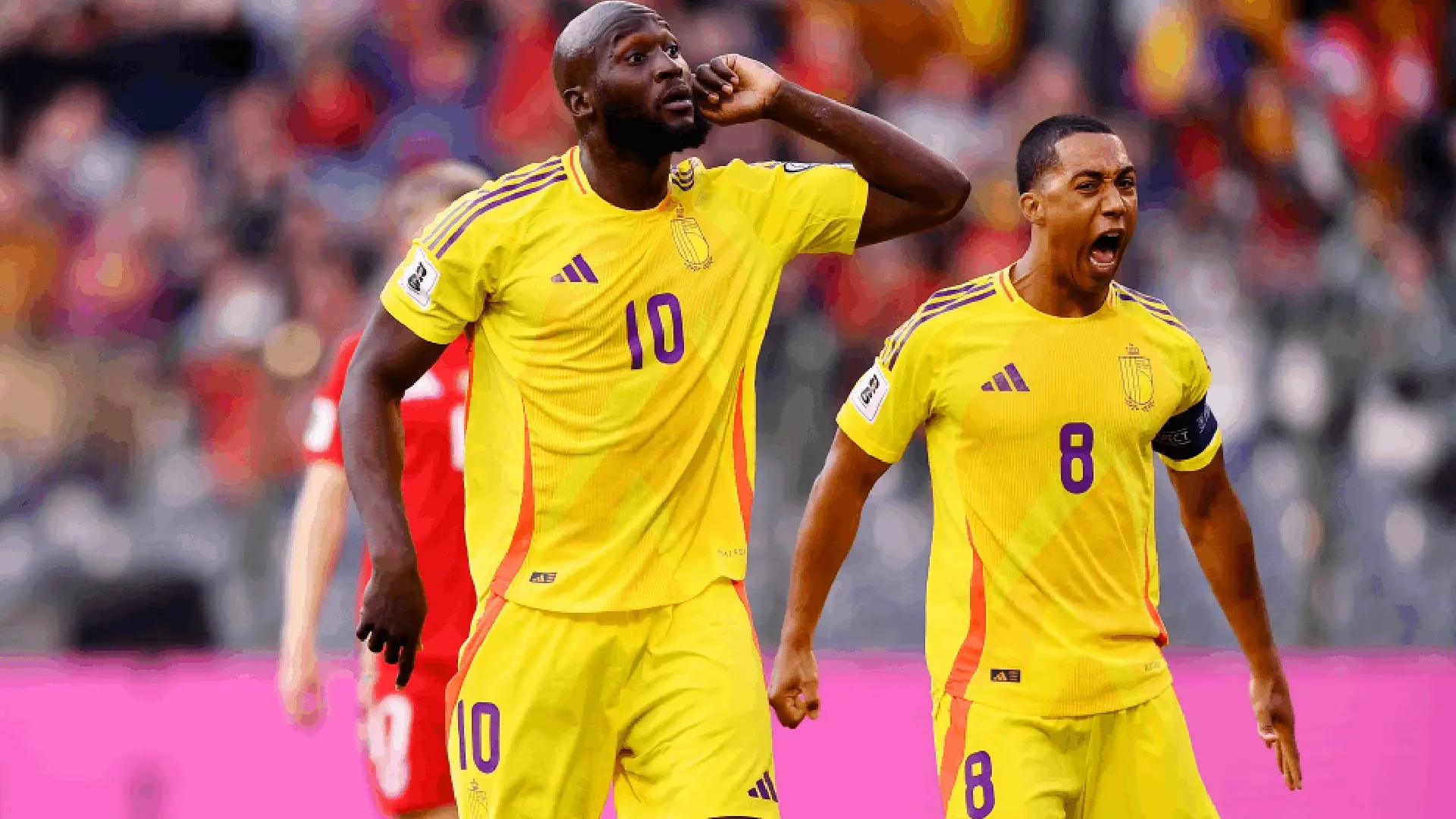
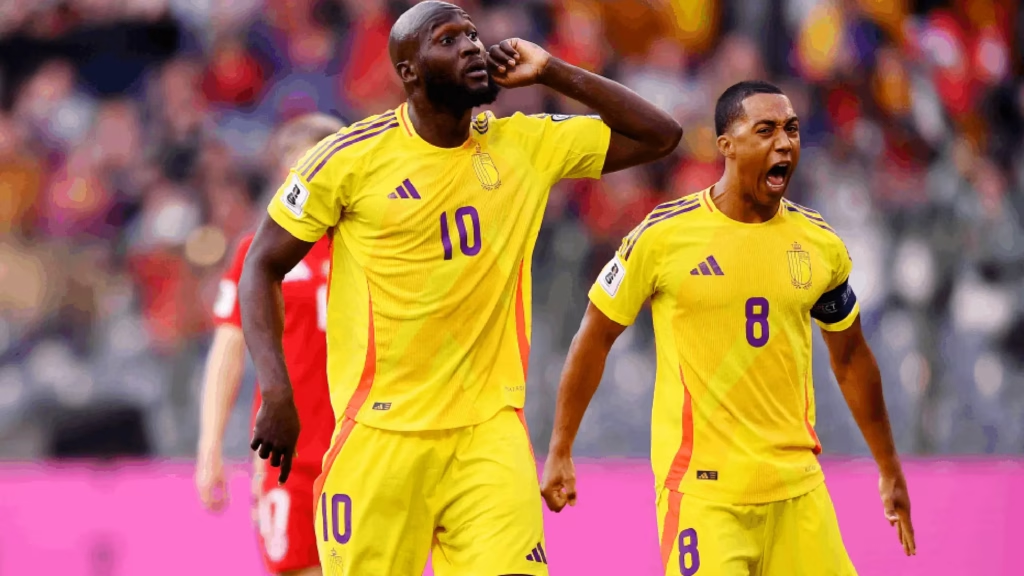
Kevin De Bruyne delivered a masterclass performance from the penalty spot as Belgium came from behind to defeat Wales 4-2 at Cardiff City Stadium on October 13, 2025, dealing a significant blow to the hosts’ automatic World Cup qualification hopes. The Manchester City midfielder’s two converted penalties, combined with goals from Thomas Meunier and Leandro Trossard, secured a vital three points that moved Belgium closer to securing their place at the 2026 World Cup.
Early Welsh Promise
Craig Bellamy’s Wales started the encounter with purpose and intensity, knowing that victory could see them leapfrog Belgium into top spot in Group J. The home side’s aggressive pressing and direct approach paid dividends early when Joe Rodon rose unmarked to power home a header from Sorba Thomas’s corner in the eighth minute.
The Leeds United defender’s goal sent Cardiff City Stadium into raptures and gave Wales the perfect platform to build upon. Rodon’s celebration marked his second successive qualifier goal at the venue, highlighting his growing importance to Wales’s set-piece threat under Bellamy’s management.
The early goal validated Bellamy’s tactical approach, which emphasized high intensity and quick transitions to exploit Belgium’s occasionally vulnerable defense. However, the lead lasted just ten minutes as Belgium’s quality began to tell.
Belgian Response and VAR Drama
Belgium’s equalizer came through controversial circumstances in the 18th minute when Ethan Ampadu was adjudged to have handled the ball in the penalty area following a VAR review. De Bruyne stepped up to convert the spot-kick with his characteristic composure, sending Wales goalkeeper Karl Darlow the wrong way.
The penalty decision proved pivotal in changing the match’s momentum. Belgium seized control of proceedings, with their technical superiority becoming increasingly evident as the first half progressed. Jeremy Doku and Leandro Trossard began to find space in wide areas, stretching Wales’s defensive structure.
Thomas Meunier completed the turnaround in the 24th minute with a thunderous strike following excellent approach play from Trossard and Doku. The right-back’s powerful effort from inside the penalty area gave Darlow no chance and highlighted Belgium’s ability to create opportunities from various positions.
Second Half Penalties and Drama
The second half continued the penalty theme when Jordan James was penalized for handball, giving De Bruyne his second opportunity from twelve yards. The Napoli midfielder made no mistake again, coolly slotting past Darlow to extend Belgium’s advantage to 3-1 in the 76th minute.
De Bruyne’s penalty expertise proved crucial, with the midfielder now having scored seven goals against Wales throughout his international career—more than against any other nation. His clinical finishing under pressure demonstrated the mentality that has made him one of world football’s premier players.
Wales refused to surrender despite the two-goal deficit, and substitute Nathan Broadhead provided late hope when he lashed a strike past Thibaut Courtois in the 89th minute. The Ipswich Town forward’s goal set up a grandstand finish and gave the home crowd renewed optimism.
However, Belgium’s experience shone through in the final moments when they executed a devastating counter-attack. Trossard capped the move with a clinical finish to restore the two-goal advantage and secure the victory.
Statistical Dominance
Belgium’s victory was built on their superior technical ability and clinical finishing in crucial moments. The Red Devils’ penalty record in this qualifying campaign has been exceptional, with De Bruyne’s double taking their tally to four successful spot-kicks—more than any other team in the competition.
Match Statistics:
- Belgium: 14 shots, 6 on target, 58% possession
- Wales: 11 shots, 5 on target, 42% possession
- Belgium corners: 7, Wales corners: 5
- Belgium penalties: 2/2, Wales penalties: 0/0
The statistics reflected Belgium’s ability to create high-quality chances and convert them efficiently. Their clinical edge in the penalty area proved decisive in a match where both teams created numerous opportunities.
Tactical Analysis
Rudi Garcia’s Belgium employed a fluid 3-4-2-1 formation that allowed their wing-backs to provide width while maintaining central compactness. The system enabled De Bruyne and Trossard to operate in advanced positions, creating overloads in dangerous areas.
Wales’s 4-2-3-1 formation under Bellamy showed promise in the opening stages but struggled to cope with Belgium’s technical quality as the match progressed. The hosts’ pressing game was effective early on but became less sustainable as Belgium’s possession-based approach wore them down.
Group J Implications
The result significantly altered the dynamics of Group J, with Belgium now four points clear of Wales and holding a commanding position heading into the final fixtures. Belgium’s 25-match unbeaten run in World Cup qualifiers continues, representing their longest streak since at least 2010.
Current Group J Standings:
- Belgium – 14 points
- North Macedonia – 11 points
- Wales – 10 points
- Kazakhstan – 4 points
Wales now face an uphill battle to secure automatic qualification, with the playoff route looking increasingly likely for Bellamy’s side. North Macedonia’s 1-1 draw with Kazakhstan on the same evening means Wales trail the second-placed team by just one point, keeping their hopes alive.
Post-Match Analysis
The defeat represents a significant setback for Wales’s World Cup ambitions under new management. Bellamy’s side showed character and quality in patches but ultimately lacked the clinical edge required to trouble a Belgium team operating at the highest level.
For Belgium, the victory demonstrates their championship mentality and ability to respond to adversity. Garcia’s team showed the experience and tactical flexibility that makes them genuine contenders for World Cup success in North America.
The match also featured an unusual moment when substitute Brennan Johnson had to chase a rat off the pitch during the second half, adding an element of levity to an otherwise intense encounter. Such moments remind us of football’s unpredictable nature and the unique atmosphere that only international football can provide.
Belgium’s path to qualification now looks clear, with one victory from their remaining fixtures likely to secure top spot in the group. For Wales, the focus shifts to ensuring they finish as one of the best runners-up to secure their playoff position and maintain their World Cup dreams.