
Johan Cruyff – The Total Football Architect
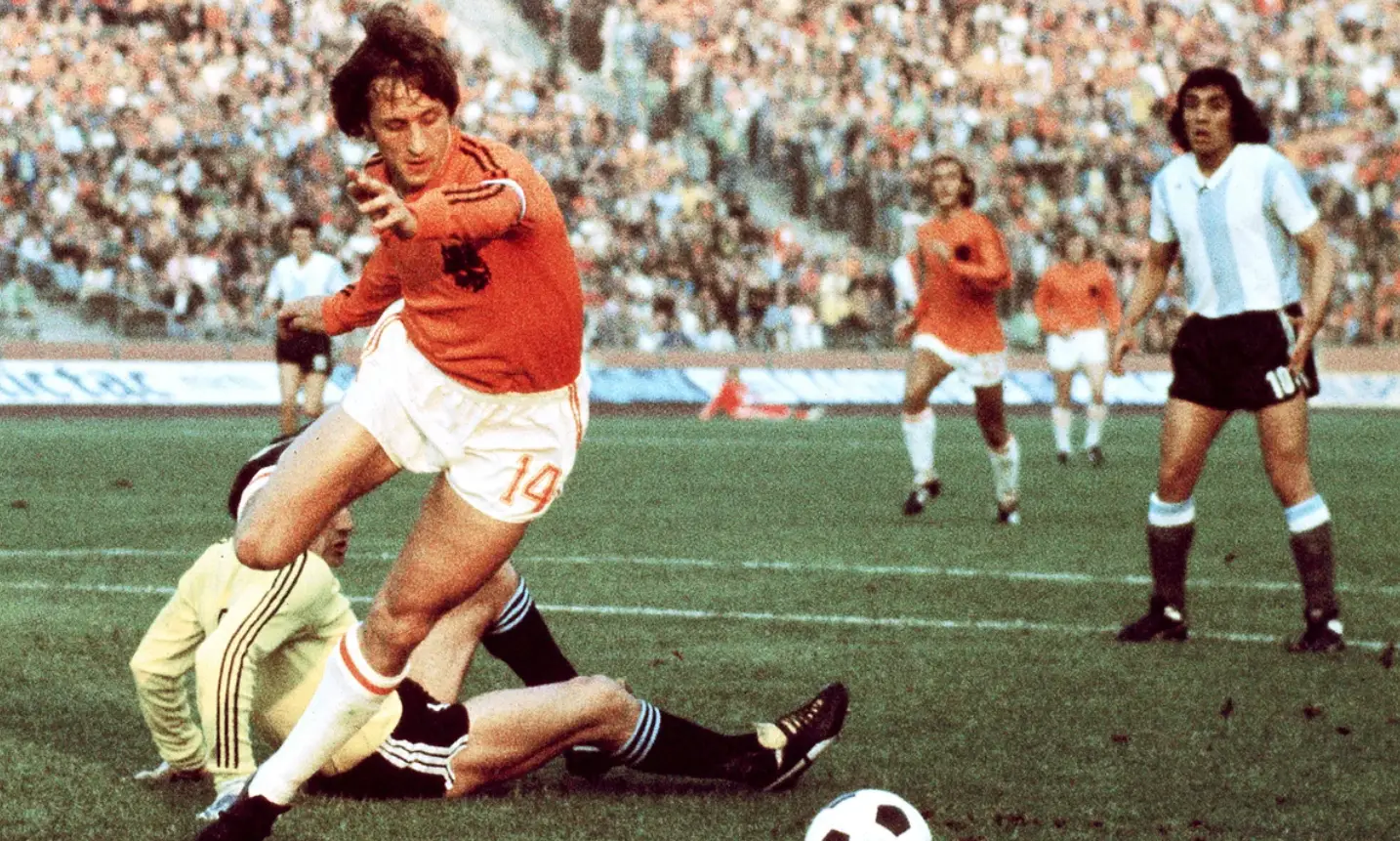
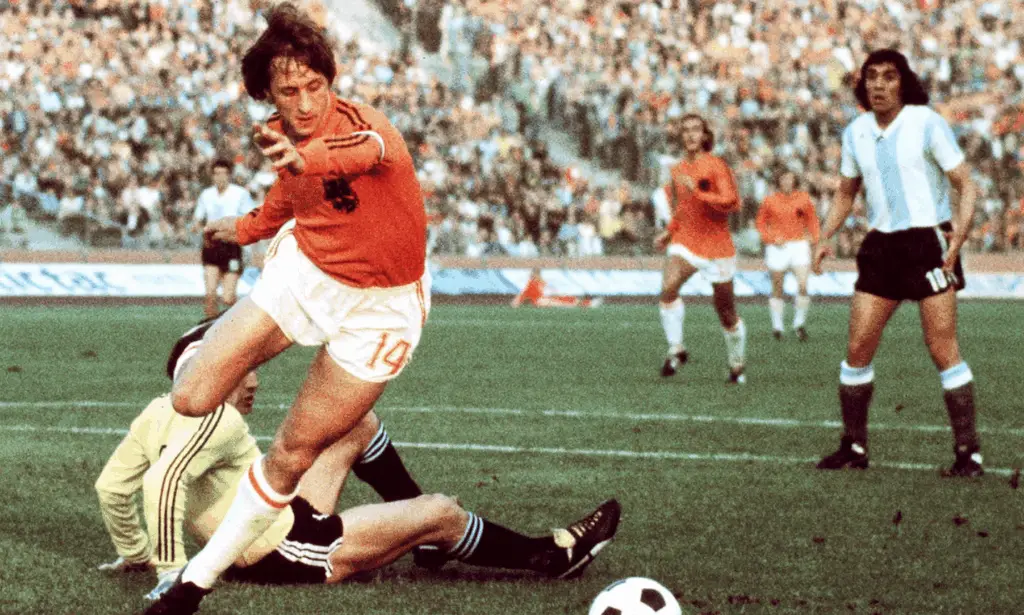
Johan Cruyff revolutionized football through his playing style and tactical philosophy that transformed the sport’s strategic understanding. Born in Amsterdam in 1947, Cruyff emerged from Ajax’s youth system to become the embodiment of “Total Football” – a system where players interchanged positions fluidly while maintaining tactical balance throughout matches.
His technical abilities combined pace, balance, and vision in ways that few players have matched. The “Cruyff Turn,” his signature move, became a fundamental skill taught to young players worldwide. This deceptive technique allowed him to change direction while maintaining ball control, leaving defenders confused and creating space for attacks.
Cruyff’s influence extended beyond individual techniques to tactical innovation. At Barcelona, both as player and later coach, he established the possession-based philosophy that continues defining the club’s identity. His understanding of space, timing, and player movement created the foundation for modern football’s tactical evolution.
Franz Beckenbauer – The Libero Revolution
Franz Beckenbauer redefined defensive play through his role as “libero” or sweeper, transforming defense from purely reactive to creatively proactive. Born in Munich in 1945, “Der Kaiser” combined defensive solidity with attacking initiative, starting attacks from deep positions while maintaining defensive responsibilities.
His elegant playing style contrasted sharply with traditional defenders who relied primarily on physical confrontation. Beckenbauer’s ball-playing abilities allowed him to contribute to Bayern Munich and West Germany’s attacking phases while organizing defensive structures. This dual capability created a new defensive archetype that influenced generations of center-backs.
Illustrated collection of the 50 greatest classic football boots ranked by FourFourTwo magazine, showcasing iconic styles from football history fourfourtwo
World Cup success in 1974 as captain and 1990 as coach demonstrated Beckenbauer’s tactical intelligence. His leadership qualities and strategic understanding helped Germany achieve international success across different decades, proving his impact extended beyond individual performances to team organization and mentality.
Zinedine Zidane – Artistry in Motion
Zinedine Zidane elevated football’s technical standards through performances that combined power with precision in ways few players achieved. Born in Marseilles in 1972, Zidane’s career featured moments of individual brilliance that decided major tournaments and club competitions at crucial moments.
His ball control and first touch allowed him to receive passes in tight spaces while maintaining possession under pressure. Zidane’s passing range created scoring opportunities from various field positions, while his shooting technique produced spectacular goals that became instant classics. The volley against Bayer Leverkusen in the 2002 Champions League final exemplified his ability to execute perfect technique during pressure moments.
France’s 1998 World Cup victory showcased Zidane at his peak, with two headed goals in the final against Brazil. His tournament performances demonstrated how individual excellence could elevate entire teams, inspiring teammates to achieve levels beyond their normal capabilities.
Garrincha – The Joy of Football
Manuel Francisco dos Santos, known as Garrincha, brought pure joy and unpredictability to football through his dribbling abilities and infectious personality. Born in 1933 with legs deformed from birth, he transformed physical disadvantages into advantages that baffled opponents and delighted spectators worldwide.
His right-footed dribbles and body feints created magic moments that seemed to defy physics. Garrincha’s ability to beat multiple defenders in succession while maintaining ball control made him virtually unstoppable during individual attacking runs. Brazil’s 1962 World Cup triumph relied heavily on his performances after Pelé’s early injury.
The Brazilian winger’s approach to football emphasized entertainment over mere winning. His tricks, nutmegs, and celebrations reminded fans that football should bring happiness and wonder. This philosophy influenced Brazilian football culture and continues inspiring players who prioritize creativity over conservative approaches.
Alfredo Di Stéfano – The Complete Player
Alfredo Di Stéfano demonstrated completeness in every aspect of football, excelling in defense, midfield, and attack throughout his career. Born in Buenos Aires in 1926, “The Blond Arrow” became Real Madrid’s foundation during their 1950s European Cup dominance, scoring in five consecutive finals.
His work rate and tactical intelligence allowed him to contribute across all field areas within single matches. Di Stéfano’s goalscoring record matched pure strikers, while his playmaking abilities rivaled creative midfielders. This versatility made him invaluable to teams and difficult for opponents to mark effectively.
European Cup success with Real Madrid established Di Stéfano as continental football’s first true superstar. His performances in European competition elevated the tournament’s prestige while demonstrating how individual excellence could define entire competitions. Modern players continue studying his movement patterns and positioning to understand complete football performance.
These legendary players transcended their eras through innovations that permanently changed football’s development. Their techniques, tactical understanding, and approaches to the game created templates that continue influencing modern players and coaches. Each contributed unique elements that enhanced football’s evolution while entertaining millions of fans worldwide.